
A Seasonal Guide to Sustainable Wedding Flowers - What Blooms When
Sometimes during initial consultations, brides share the flowers they’ve always dreamed of having on their wedding day. It’s never easy to explain that a favourite bloom won’t be in season when their date arrives.
I completely understand how disappointing that can feel. In a fast‑paced world where we’re used to having everything available instantly, it’s easy to forget that sustainably grown flowers follow their own natural rhythm - and that’s part of their magic.
British flowers bloom in harmony with the seasons, and your wedding flowers will reflect that same rhythm. This approach creates arrangements that feel effortless, intentional, and deeply connected to the time of year you’re celebrating. By choosing seasonal blooms, you’re not only making a more sustainable decision - you’re embracing flowers with far more character, fragrance, and presence.
Designing with the Seasons
The heart of my work is rooted in locally grown flowers. I primarily source from independent flower growers close to home, choosing blooms that are grown naturally and at their very best. These flowers are fresher, more expressive, and far kinder to the environment - and supporting local growers is central to my approach.
That said, not all flowers can be grown in England year-round. During certain times of the year, particularly in winter or during challenging growing seasons, I may occasionally source a small number of flowers from trusted Dutch growers as a last resort. When this happens, it’s done thoughtfully and transparently, always alongside seasonal British foliage and flowers.
Sustainable floristry isn’t about rigid rules or perfection - it’s about making informed, responsible choices, while allowing nature to lead the design process.
Spring Wedding Flowers in England (March–May)
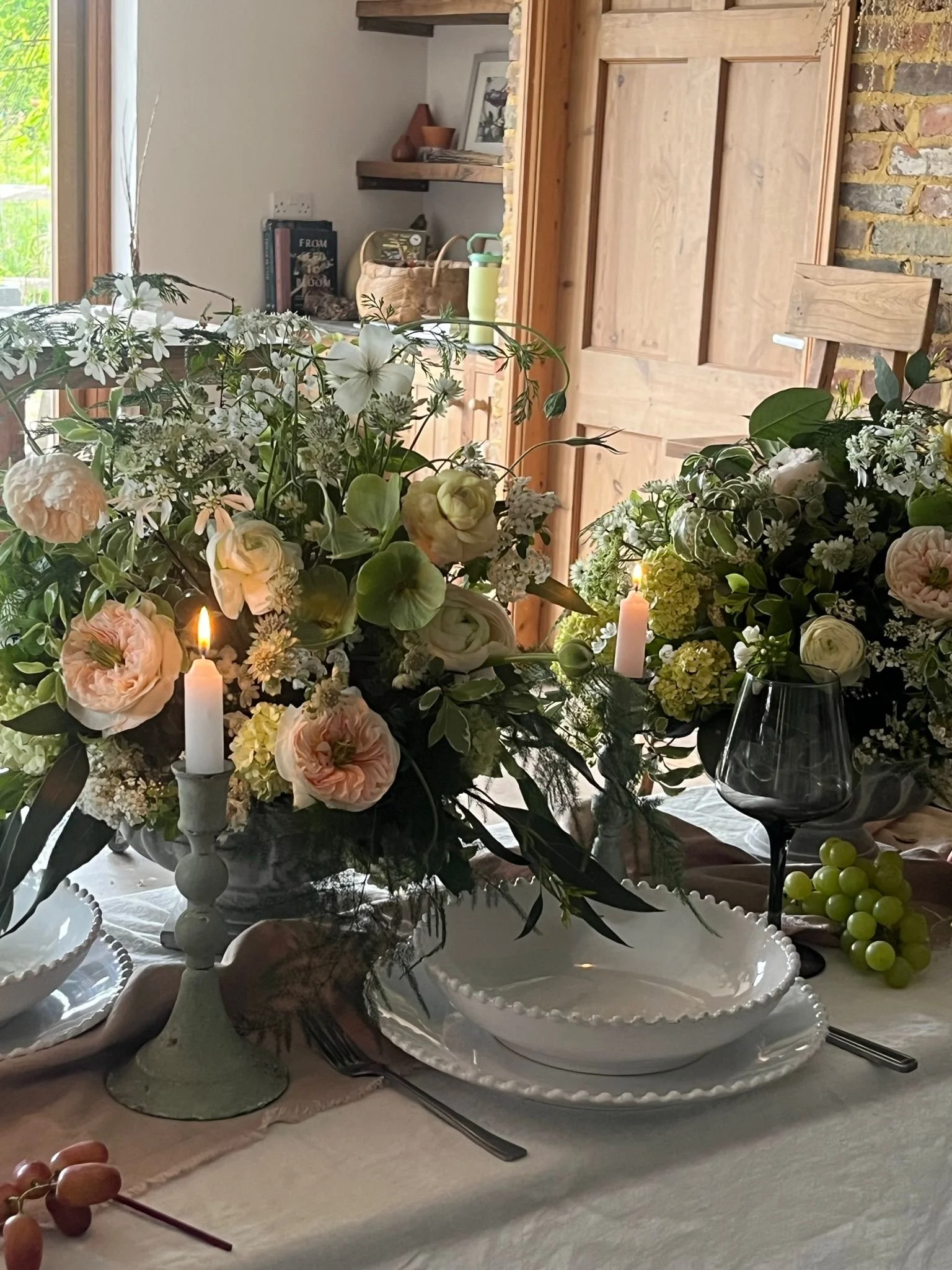
Spring in England feels soft, hopeful, and full of gentle movement. Expect delicate blooms, light fragrance, and natural elegance.
Typically available spring flowers include:
Tulips
Narcissus (daffodils)
Ranunculus
Anemones
Hellebores
Hyacinths
Muscari
Sweet peas (late spring)
Blossom branches (cherry, apple, hawthorn)
With colour palettes usually including ivory, blush, pale yellow, soft lilac, fresh green tones
Spring is one of the most naturally sustainable seasons for weddings, with many flowers available locally and without the need for imports.
Summer Wedding Flowers in England (June–August)
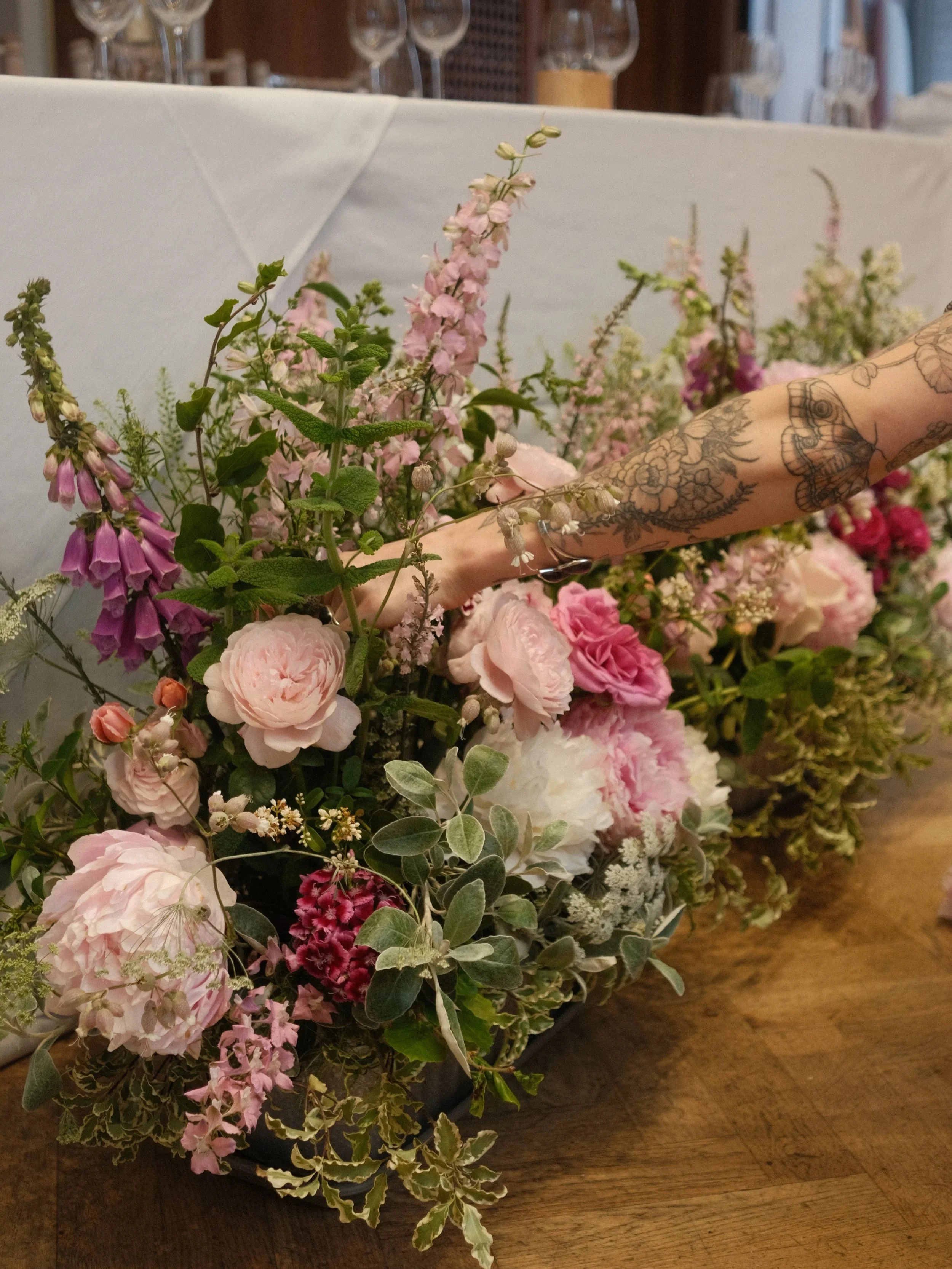
Summer offers the greatest abundance of British flowers - relaxed, romantic, and full of texture.
Typically available summer flowers include:
Garden roses
Peonies (late May-June)
Dahlias (from July onwards)
Cosmos
Scabiosa
Delphinium
Sweet peas
Cornflowers
Nigella
Summer colour palettes usually include soft neutrals and pastels to joyful, garden-inspired colours
This is peak season for British growers and allows for the most flexibility in design while maintaining a low environmental footprint.
Autumn Wedding Flowers in England (September–November)
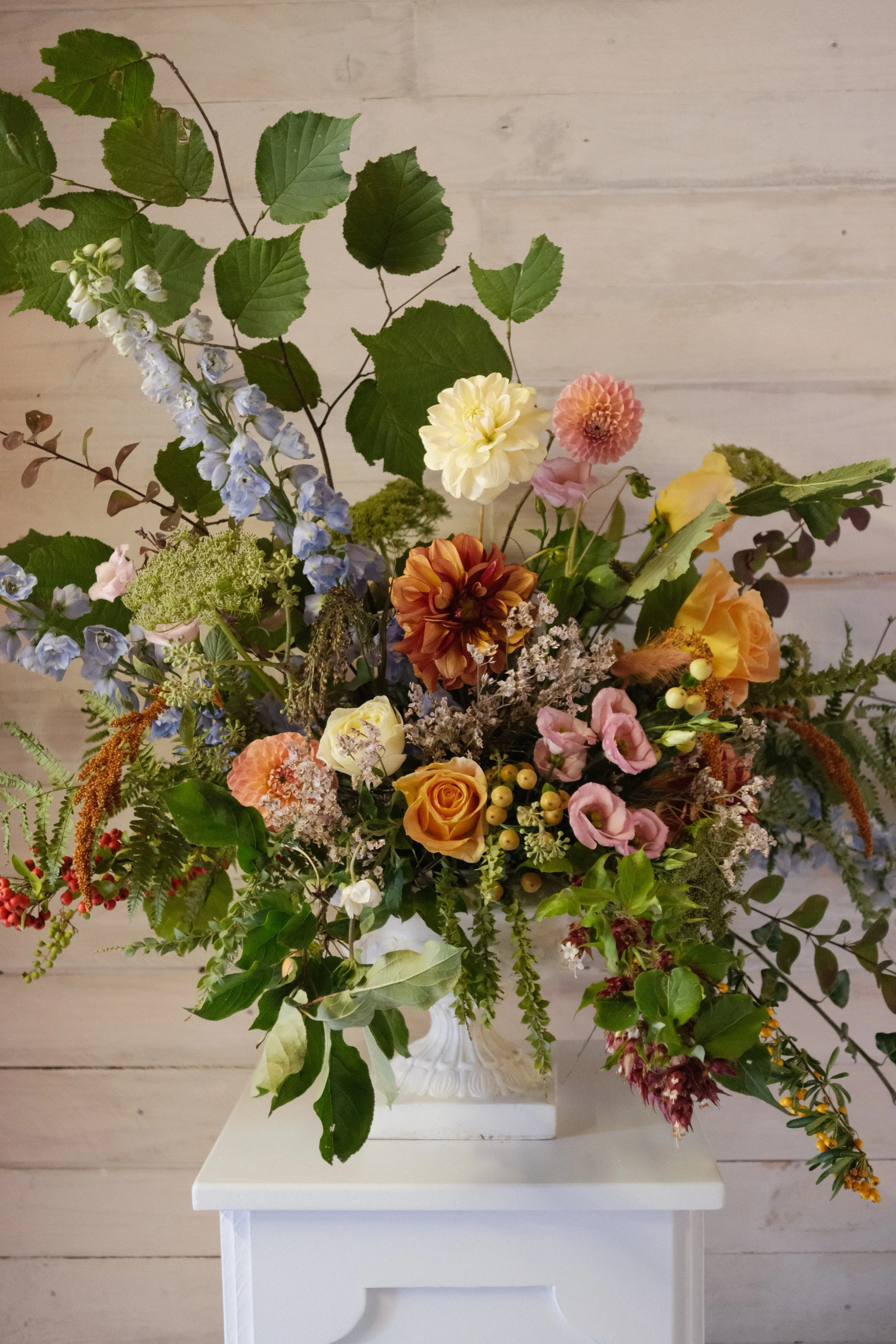
Autumn brings warmth, depth, and sense of quiet romance - florals feel textured, rich, and beautifully grounded.
Typically available autumn flowers include:
Dahlias
Chrysanthemums
Cosmos
Asters
Rudbeckia
Amaranthus
Late-season garden roses
Foliage and natural elements
Berries
Seed heads
Grasses
Autumn leaves
Moss
Autumn colour palettes usually include terracotta, rust, caramel, plum, deep red, soft neutrals.
Autumn designs often lean more heavily on foliage and natural texture, which can be both visually striking and more sustainable.
Winter Wedding Flowers in England (December–February)
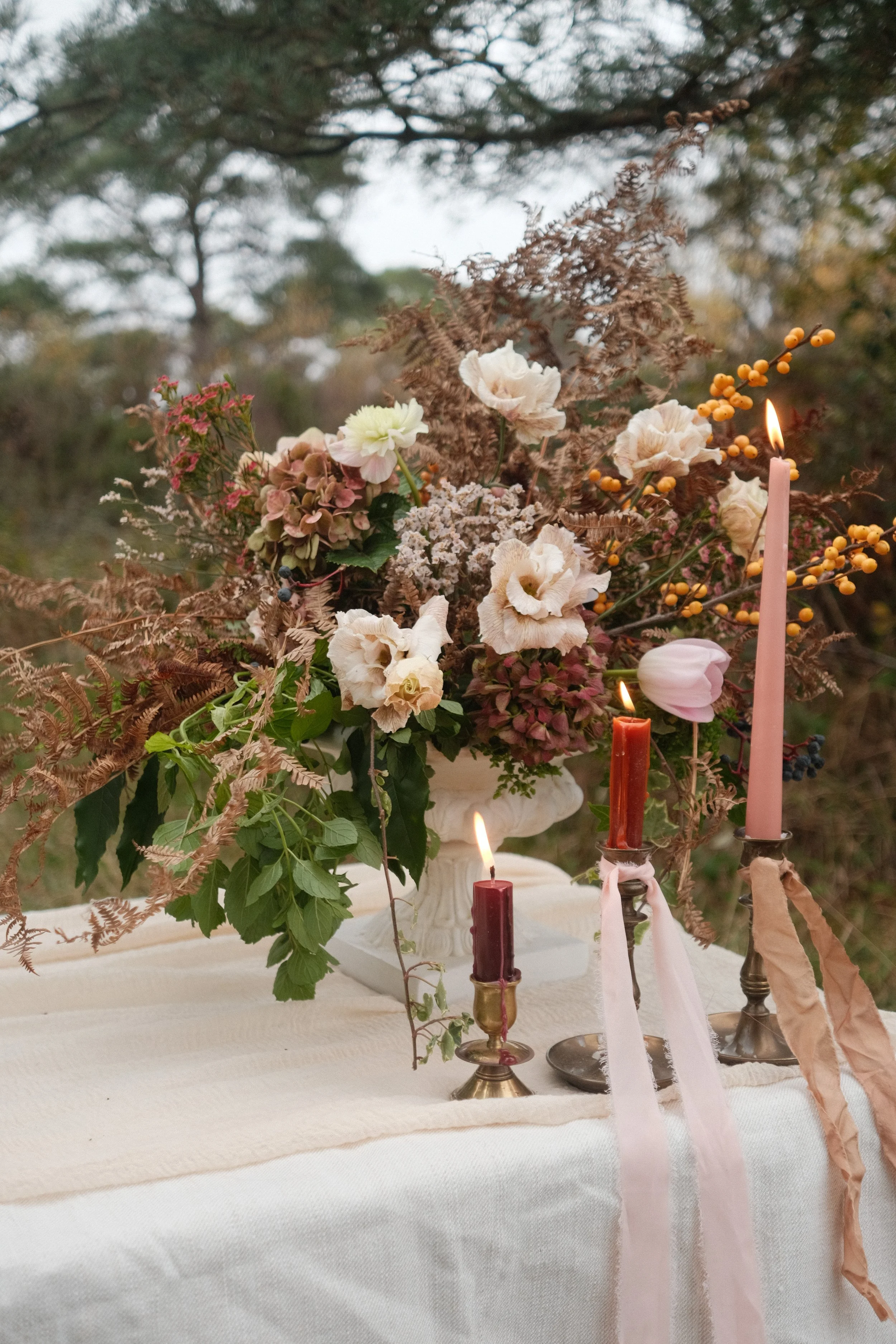
Winter florals are understated, elegant, and atmospheric - focusing on form, texture, and considered detail.
Typically available winter flowers include:
Hellebores
Anemones
Paperwhites
Camellia
Tulips (Late winter)
Narcissus (Late winter)
Season foliage and accents
Evergreens
Ivy
Holly
Branches
Dried elements
Winter colour pallettes typically include soft whites, layered greens, blush tones, and deep jewel shades.
Winter weddings often combine locally sourced foliage with carefully chosen seasonal blooms to create timeless, intentional designs.
Letting Nature Lead
Flower availability can vary slightly from year to year depending on weather and growing conditions - and that’s part of the beauty of working seasonally. Rather than fixating on specific flowers, I encourage couples to trust the process and focus on mood, texture, and overall feeling.
The result is florals that feel authentic, thoughtful, and perfectly suited to the moment.
⸻
Thoughtful, Seasonal Wedding Floristry
If you’re planning a wedding in England and are drawn to florals that feel natural, refined, and environmentally considered, designing with the seasons is the most beautiful place to begin.
I work closely with local growers to create bespoke wedding florals that celebrate the season, the landscape, and your love story.
