
A Seasonal Guide to Sustainable Wedding Flowers - What Blooms When
Sometimes during initial consultations, brides share the flowers they’ve always dreamed of having on their wedding day. It’s never easy to explain that a favourite bloom won’t be in season when their date arrives.
I completely understand how disappointing that can feel. In a fast‑paced world where we’re used to having everything available instantly, it’s easy to forget that sustainably grown flowers follow their own natural rhythm - and that’s part of their magic.
British flowers bloom in harmony with the seasons, and your wedding flowers will reflect that same rhythm. This approach creates arrangements that feel effortless, intentional, and deeply connected to the time of year you’re celebrating. By choosing seasonal blooms, you’re not only making a more sustainable decision - you’re embracing flowers with far more character, fragrance, and presence.
Designing with the Seasons
The heart of my work is rooted in locally grown flowers. I primarily source from independent flower growers close to home, choosing blooms that are grown naturally and at their very best. These flowers are fresher, more expressive, and far kinder to the environment - and supporting local growers is central to my approach.
That said, not all flowers can be grown in England year-round. During certain times of the year, particularly in winter or during challenging growing seasons, I may occasionally source a small number of flowers from trusted Dutch growers as a last resort. When this happens, it’s done thoughtfully and transparently, always alongside seasonal British foliage and flowers.
Sustainable floristry isn’t about rigid rules or perfection - it’s about making informed, responsible choices, while allowing nature to lead the design process.
Spring Wedding Flowers in England (March–May)
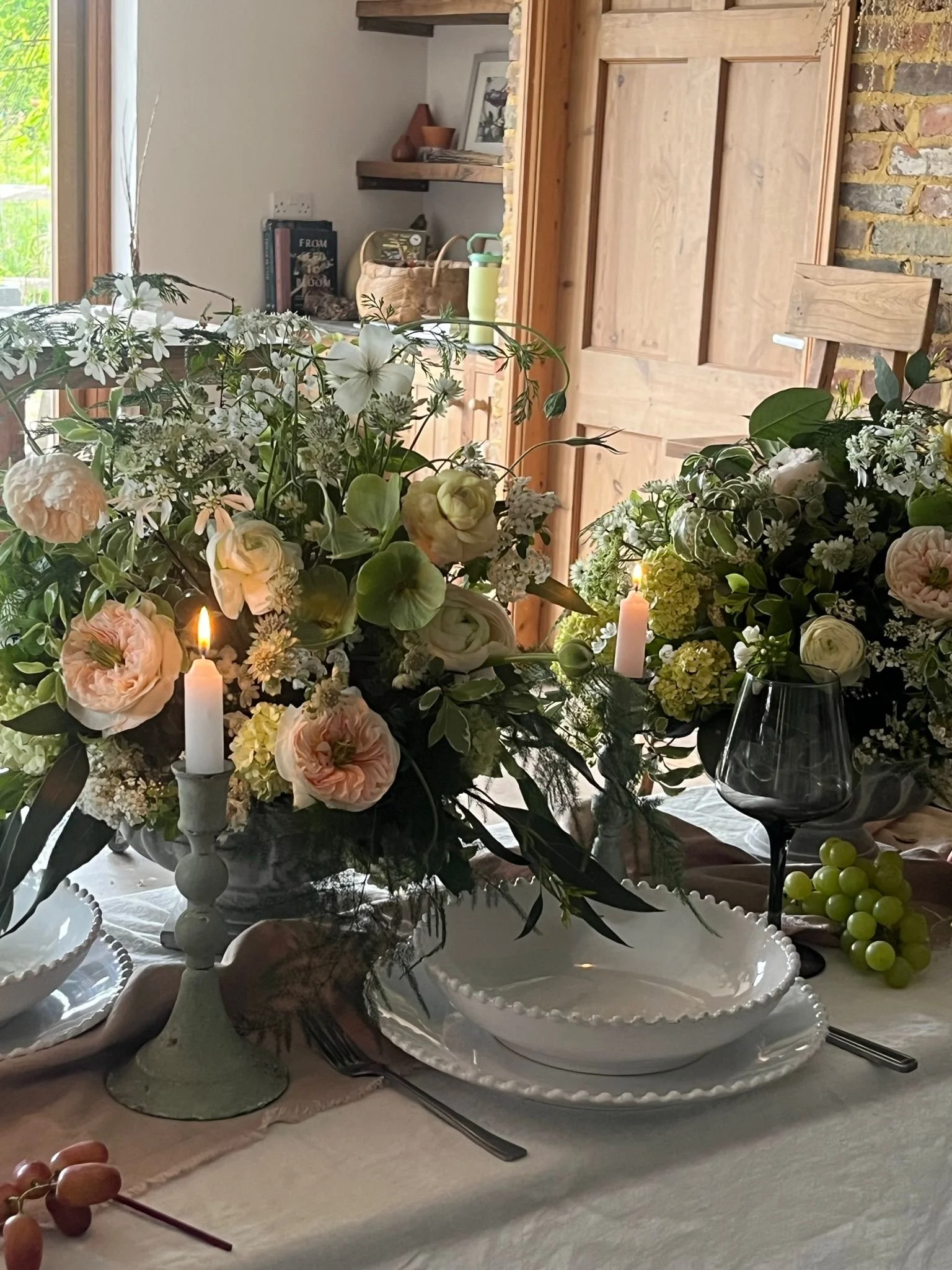
Spring in England feels soft, hopeful, and full of gentle movement. Expect delicate blooms, light fragrance, and natural elegance.
Typically available spring flowers include:
Tulips
Narcissus (daffodils)
Ranunculus
Anemones
Hellebores
Hyacinths
Muscari
Sweet peas (late spring)
Blossom branches (cherry, apple, hawthorn)
With colour palettes usually including ivory, blush, pale yellow, soft lilac, fresh green tones
Spring is one of the most naturally sustainable seasons for weddings, with many flowers available locally and without the need for imports.
Summer Wedding Flowers in England (June–August)
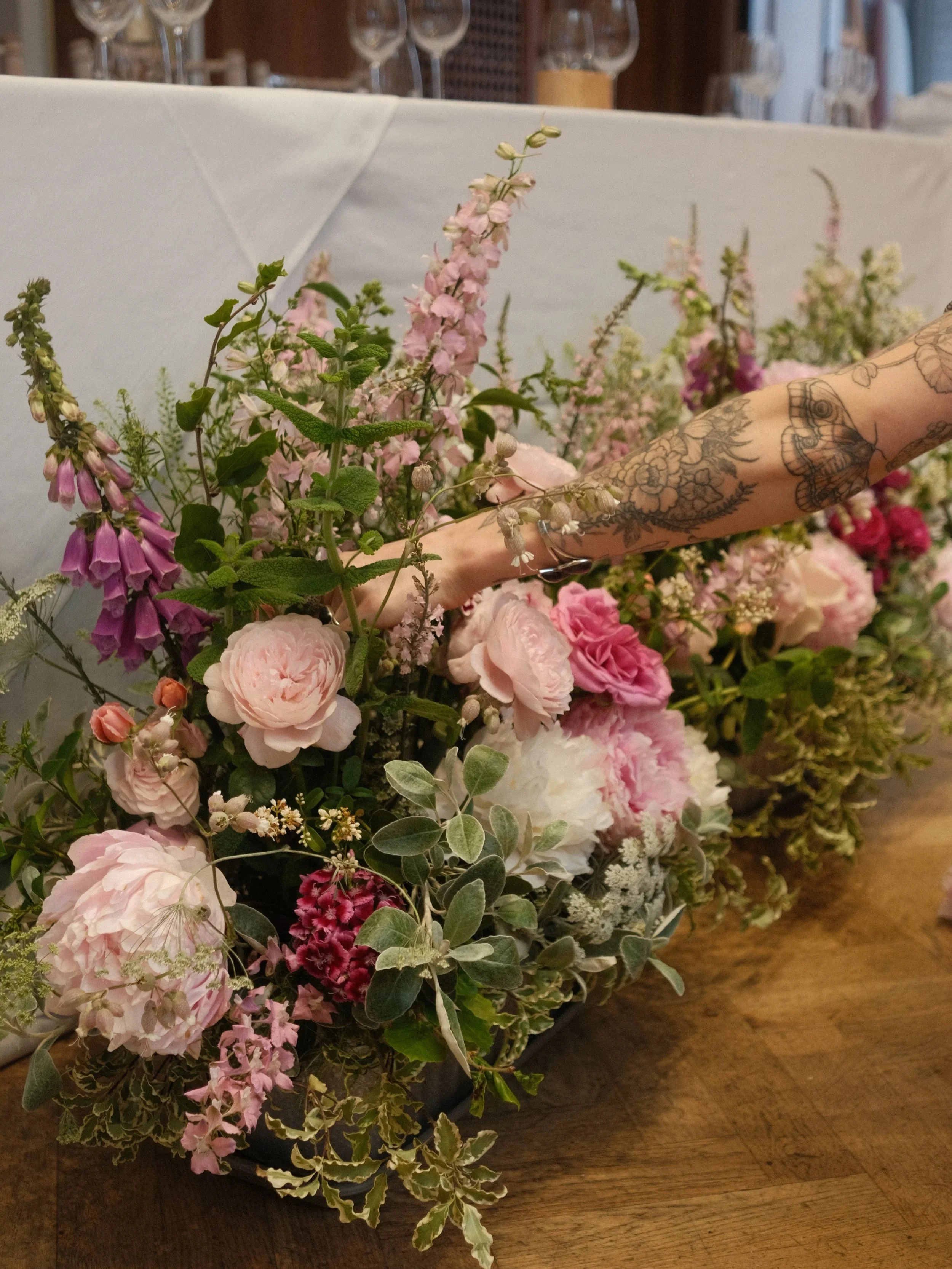
Summer offers the greatest abundance of British flowers - relaxed, romantic, and full of texture.
Typically available summer flowers include:
Garden roses
Peonies (late May-June)
Dahlias (from July onwards)
Cosmos
Scabiosa
Delphinium
Sweet peas
Cornflowers
Nigella
Summer colour palettes usually include soft neutrals and pastels to joyful, garden-inspired colours
This is peak season for British growers and allows for the most flexibility in design while maintaining a low environmental footprint.
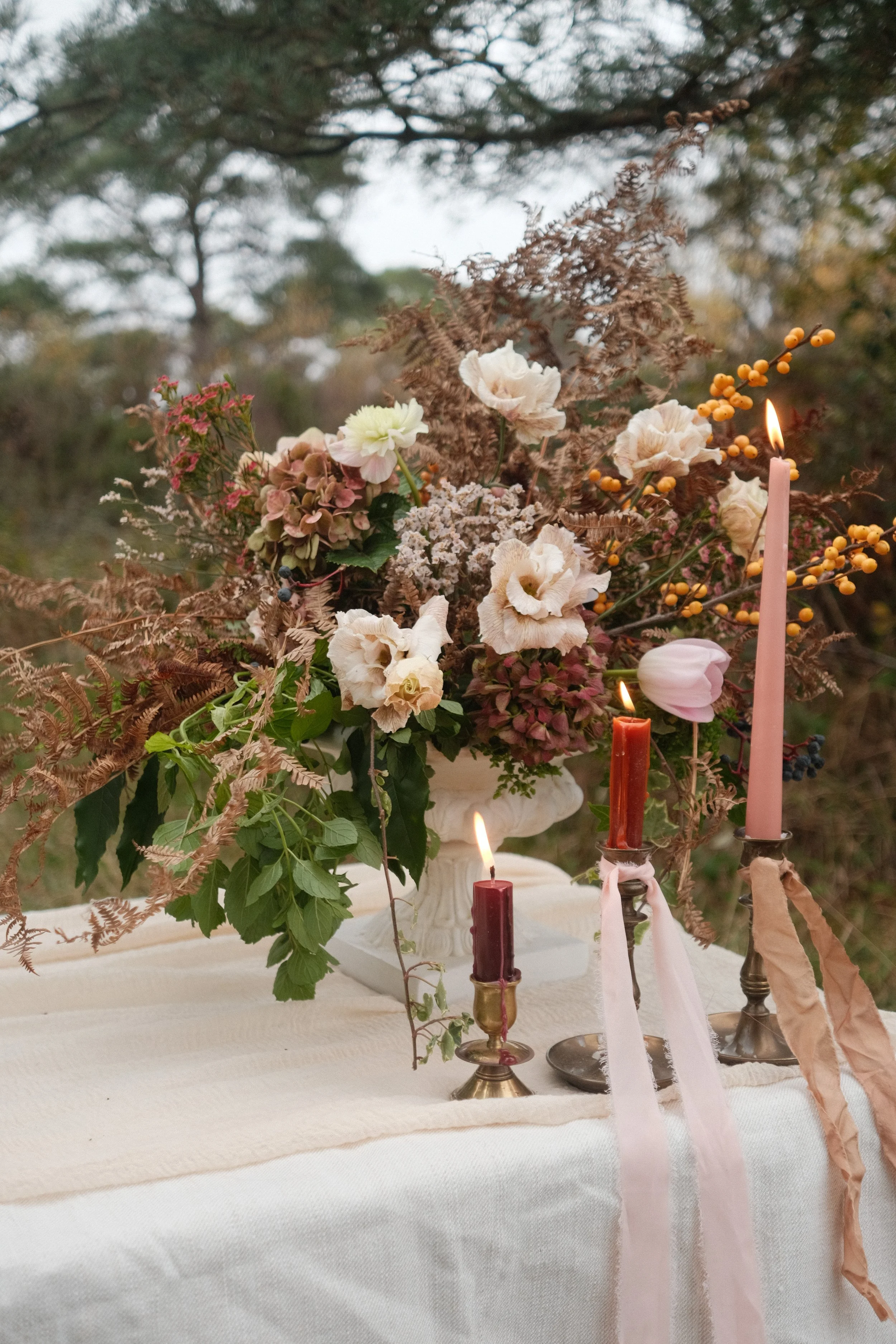
Autumn Wedding Flowers in England (September–November)
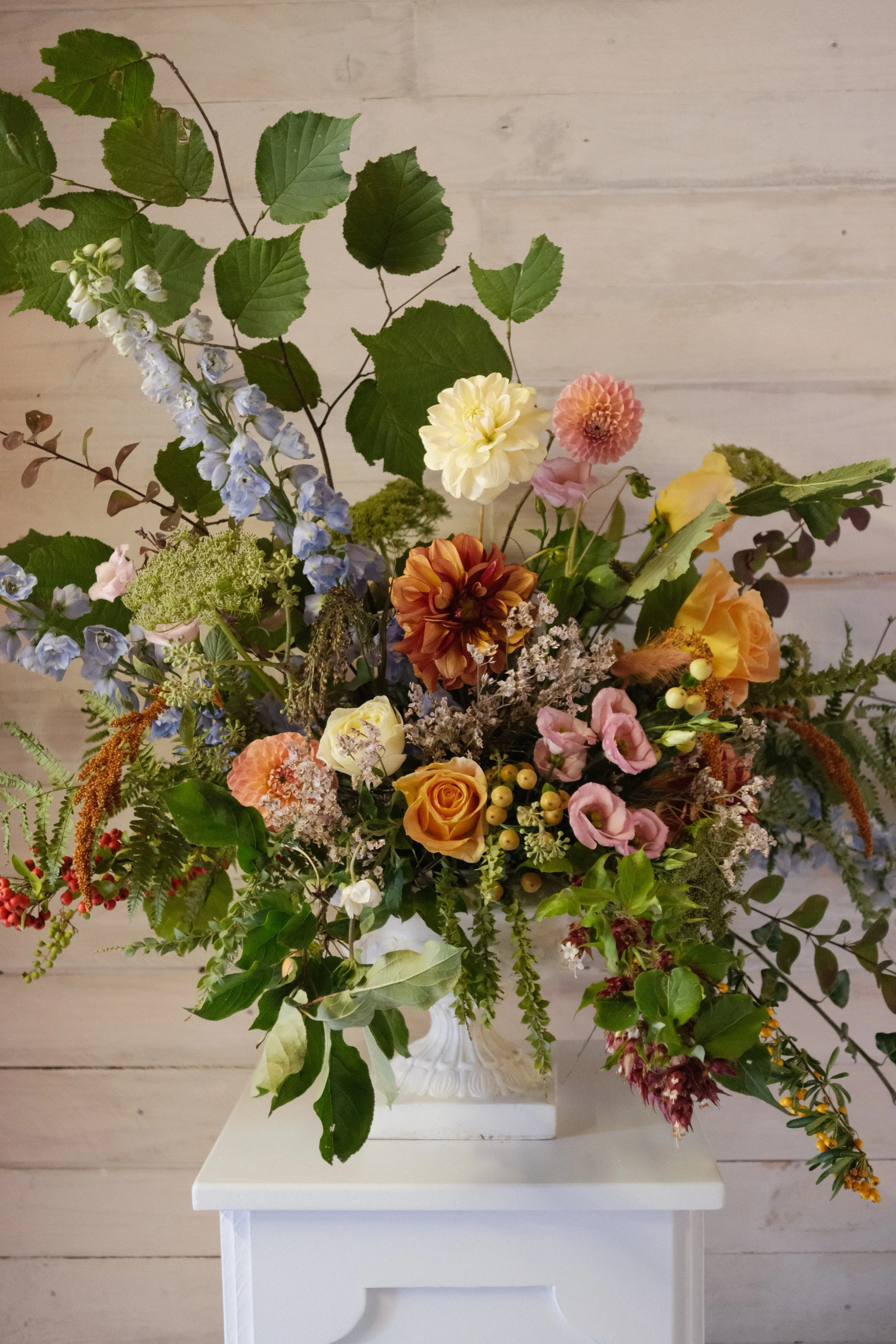
Autumn brings warmth, depth, and sense of quiet romance - florals feel textured, rich, and beautifully grounded.
Typically available autumn flowers include:
Dahlias
Chrysanthemums
Cosmos
Asters
Rudbeckia
Amaranthus
Late-season garden roses
Foliage and natural elements
Berries
Seed heads
Grasses
Autumn leaves
Moss
Autumn colour palettes usually include terracotta, rust, caramel, plum, deep red, soft neutrals.
Autumn designs often lean more heavily on foliage and natural texture, which can be both visually striking and more sustainable.
Winter Wedding Flowers in England (December–February)
Winter florals are understated, elegant, and atmospheric - focusing on form, texture, and considered detail.
Typically available winter flowers include:
Hellebores
Anemones
Paperwhites
Camellia
Tulips (Late winter)
Narcissus (Late winter)
Season foliage and accents
Evergreens
Ivy
Holly
Branches
Dried elements
Winter colour pallettes typically include soft whites, layered greens, blush tones, and deep jewel shades.
Winter weddings often combine locally sourced foliage with carefully chosen seasonal blooms to create timeless, intentional designs.
Letting Nature Lead
Flower availability can vary slightly from year to year depending on weather and growing conditions - and that’s part of the beauty of working seasonally. Rather than fixating on specific flowers, I encourage couples to trust the process and focus on mood, texture, and overall feeling.
The result is florals that feel authentic, thoughtful, and perfectly suited to the moment.
⸻
Thoughtful, Seasonal Wedding Floristry
If you’re planning a wedding in England and are drawn to florals that feel natural, refined, and environmentally considered, designing with the seasons is the most beautiful place to begin.
I work closely with local growers to create bespoke wedding florals that celebrate the season, the landscape, and your love story.
What goes into the price of your wedding flowers?
When planning a wedding, I’m sure a lot of couples find themselves asking:
“Why do wedding flowers cost so much?”
It’s a completely fair question - and one I’m always happy to answer. There’s so much that happens behind the scenes that you may never even think about (and that’s okay!). It’s my job to worry about every detail of your flowers, not yours. As long as your florals are perfect on the day, that’s all you should have to think about.
All of that hidden planning, time, expertise, and care does matter - and those elements are what contribute to the overall cost.
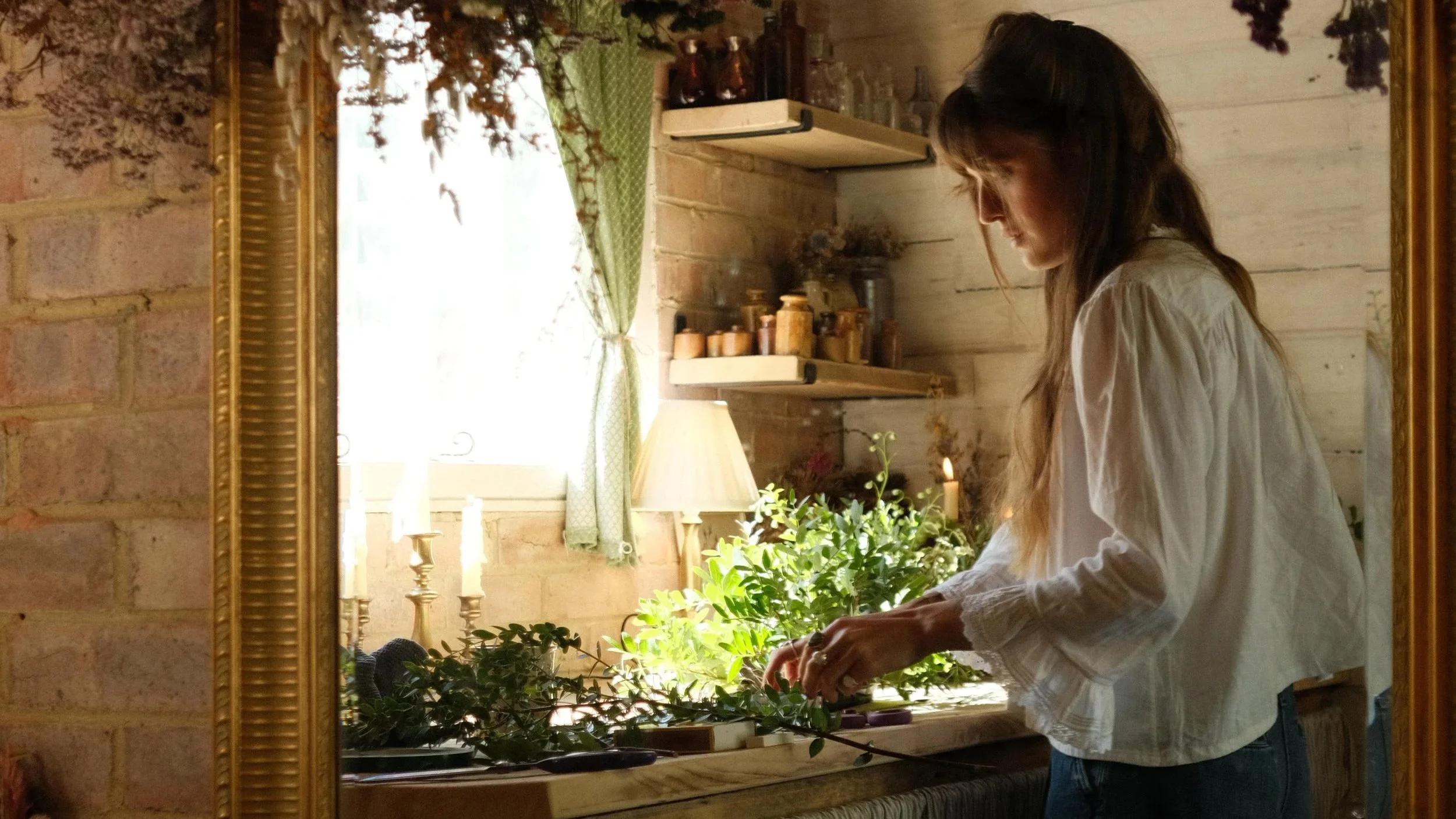
When I first started my floristry training, I was honestly surprised by the prices too. But as my business has grown, I have come to understand first-hand just how much goes into creating wedding flowers - not just on the wedding day itself, but in the weeks and months leading up to it.
Before Any Flowers Are Ordered
Long before your wedding date arrives, there’s a lot happening behind the scenes.
Consultations and Communication -
Every wedding starts with conversations - initial enquires, consultations, emails, and planning calls. Clear communication is really importantant to me, as it allows us to talk through your ideas, venue, colour palette, and overall vision in detail. This helps me create a completely personalised plan for you and ensures everything feels right from the very beginning.
Mood Boards and Proposals -
Creating mood boards and detailed proposals takes time and creativity. I’m a very visual person. Using images for inspiration helps bring your ideas to life and makes sure we’re completely on the same page before anything is ordered or made.
Planning and Organisation -
This includes planning flower varieties and figuring out stem counts for each item, checking seasonal availability, liaising with suppliers and growers, and carefully organising timings. This level is planning helps everything run smoothly - especially on the day itself.
Running a Floristry Business
Floristry is a creative job, but it’s also a business, with ongoing costs that make everything possible.
Marketing, Social Media and Website -
Sharing my work, maintaining social media, responding to enquires, and running a professional website all take time and investment. These are the places most clients first discover my work.
Workspace, Tools and Equipment -
Having a dedicated space to work, along with tools, buckets, storage, a laptop, and software also need to be taken into account of overall costs of running my business.
Insurance and Legal costs -
Public liability and business insurance are essential when working in venues and installing floral designs - they protect both you and me.
Sustainability and Values
Sustainability is really important to me, and it plays a big role in how I work. It’s something I prioritise in my daily life as well as in my business, and it guides many of the choices I make when creating wedding flowers.
This often means choosing more expensive materials that align with my values - such as reuseable mechanics, foam-free techniques, quality, and long-lasting structures. It also means working with trusted suppliers and local flower farmers wherever possible, even when that comes at a higher cost.
These choices aren’t always the cheapest option, but they allow me to create beautiful florals in a way that feels responsibile and aligned with how I want to work.
The Flowers Themselves
When you first see quotes for wedding flowers, it’s completely natural to think only about the cost of the flowers themselves.
This blog is here to show that while the flowers are a big part of the price, there is so much more involved behind the scenes.
You might be used to seeing bouquets in your local supermarket at a much lower price. Wedding flowers, however, are a premium product. They often include specialist varieties and seasonal blooms that you simply wouldn’t find in a supermarket, chosen specifically for their quality, appearance, and longevity.
Before any arranging even begins, a great deal of care and time goes into conditioning your flowers. This process ensures they are at their absolute best and last as long as possible on your wedding day.
Delivery, Set-up and Pack Down
Wedding days usually start early. We carefully check every flower, tick off detailed lists, and pack everything neatly to ensure nothing is damaged in transit. Your flowers are then transported and delivered to your venue within a pre-planned timeframe agreed with both you and your venue team.
This is where all of the planning truly pays off. After months of preparation, everything is ready to go, and each arrangement is placed exactly where it has been carefully planned to be.
If you have hired items such as bud vases, arches, stands, or vessels, these will need to be collected the following day. Once collected, they are carefully cleaned, checked, and stored, ready for future events.
Location Matters Too
I’m based in Sussex, which is a beautiful place to work - but it is also a more expensive area. Costs such as studio space, fuel, suppliers, and general business are higher here, and that naturally affects pricing.
More Than Just Flowers
When you book your wedding flowers, you’re not just paying for the blooms. You’re investing in:
Time, planning, and organisation
Professional experience and design
Sustainable choices and quality materials
Reliable delivery, set-up and pack down
Every wedding is unique, and every floral design is created with care, intention, and a lot of love.